 0

 0
 English
 España
Durable Bathroom Fixtures Are Not Just Hard to Break: Why Low-Maintenance Design Is Becoming a Product Requirement
Summary: Durable bathroom fixtures require more than corrosion-resistant bodies. Long service life depends on system reliability, repair access, replaceable wear parts, spare-part continuity, installation error-proofing, water-quality tolerance and maintenance planning.

Why “durable” can no longer mean only stainless steel, brass or a long warranty
Bathroom product marketing often reduces durability to a material claim: 304 stainless steel, 316L stainless steel, brass, PVD, coating thickness or salt-spray hours. Those specifications matter, but a complete fixture is a multi-component system. Practical service life can end because of a cartridge, O-ring, hose, spring, diverter, electronic module or unavailable spare part long before the main body fails.
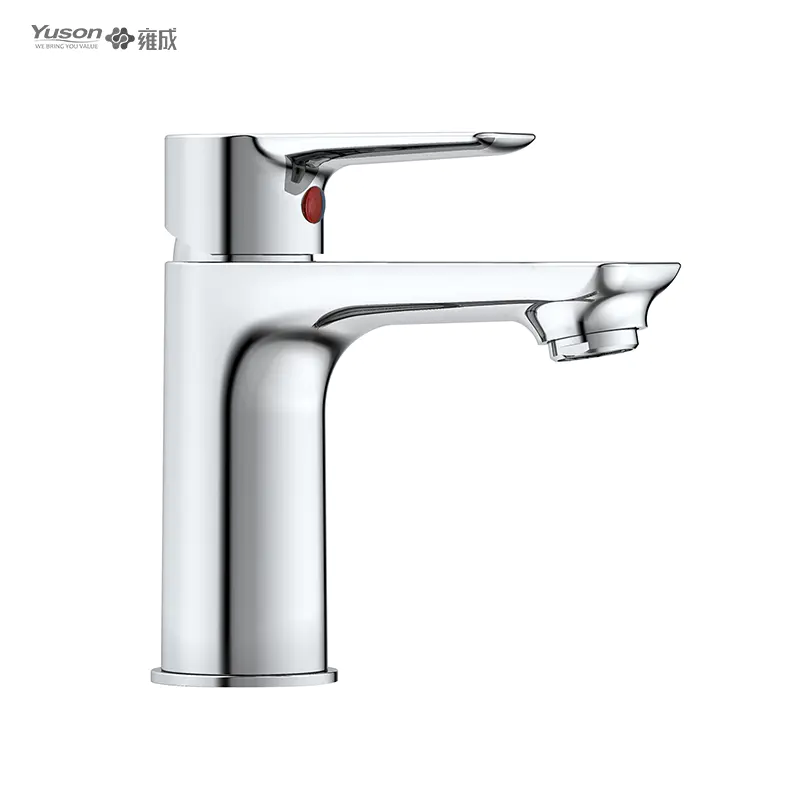
The U.S. EPA WaterSense performance framework for lavatory faucets includes lifecycle testing after 500,000 cycles. The engineering lesson is straightforward: durability should be evaluated by whether function remains stable after repeated use, not only by how the product looks or performs when new.

System reliability: the weakest link can determine faucet life
A corrosion-resistant 316L body can still belong to a short-lived product if the hose has poor fatigue resistance or a proprietary cartridge cannot be sourced later. This is why long-life design should move from component specifications to system reliability.
Manufacturers should evaluate material selection, sealing interfaces, dimensional tolerances, assembly repeatability, pressure exposure, thermal cycling, corrosion risk, surface durability and wear-part replacement as one connected reliability problem.

Low-maintenance bathroom design depends on the stakeholder
| Stakeholder | Primary maintainability requirement |
|---|---|
| Homeowner | Easy cleaning, descaling and simple replacement of common wear parts. |
| Installer / Plumber | Clear interfaces, common tools, accessible fasteners and mistake-proof installation. |
| Hotel / Facility Team | Fast diagnosis, short repair time, low downtime and stocked critical spares. |
| Importer / Distributor | Lower returns, predictable warranty cost, stable replacement-part supply. |
| Brand / Product Manager | Platform compatibility, modularity, controlled SKU complexity and long-term support. |
| Manufacturer | Repeatable tolerances, stable assembly, measurable reliability and supply continuity. |

Application-specific durability: home, hotel, public building and coastal project
Bathroom fixtures should not be engineered to one abstract durability target. Residential use, hospitality, hospitals, schools, airports and coastal projects differ in duty cycles, cleaning chemistry, water conditions, pressure variation, user behavior and service access.
Residential: easy cleaning, low scale accumulation, familiar spare parts and simple repair may be more valuable than excess over-engineering. Hotels: service time and room downtime can dominate total cost of ownership. Public applications: high cycle counts, rough handling, anti-loosening performance and resistance to aggressive cleaning become more important. Coastal environments: material selection must be combined with system-level corrosion control.

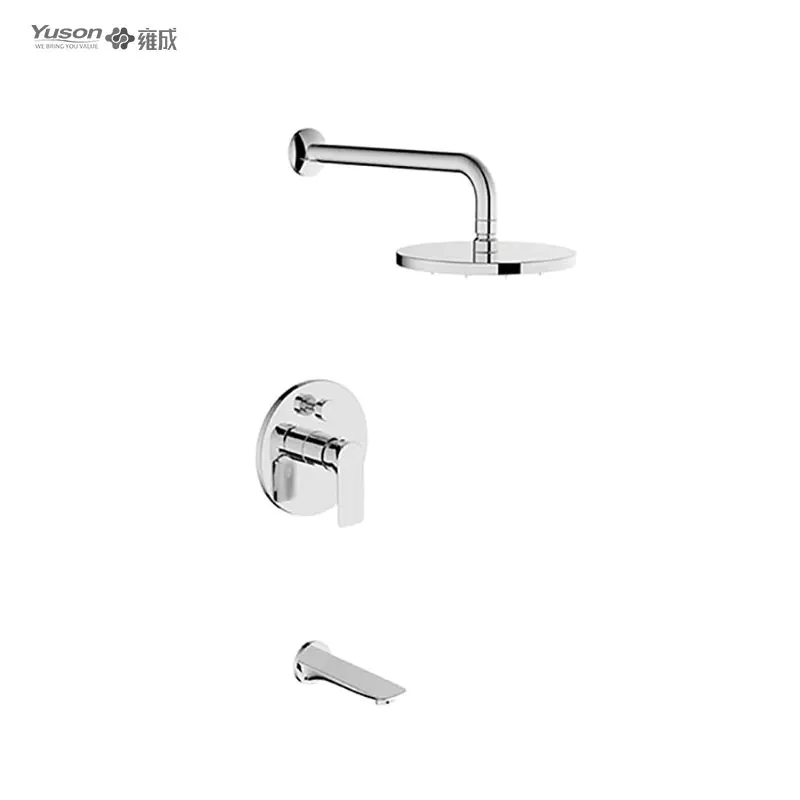
Concealed shower systems make serviceability a design requirement
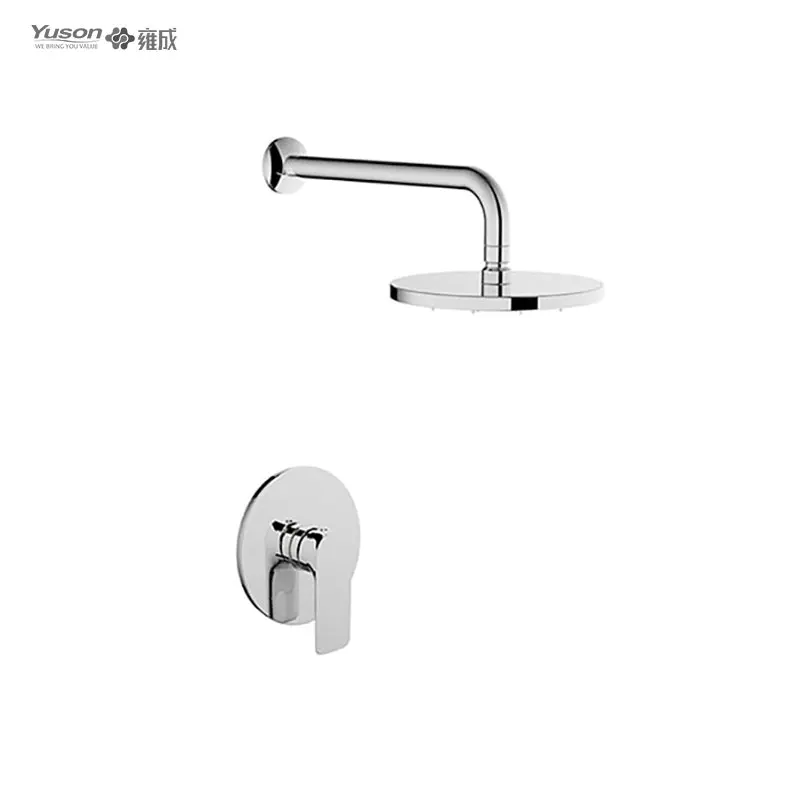
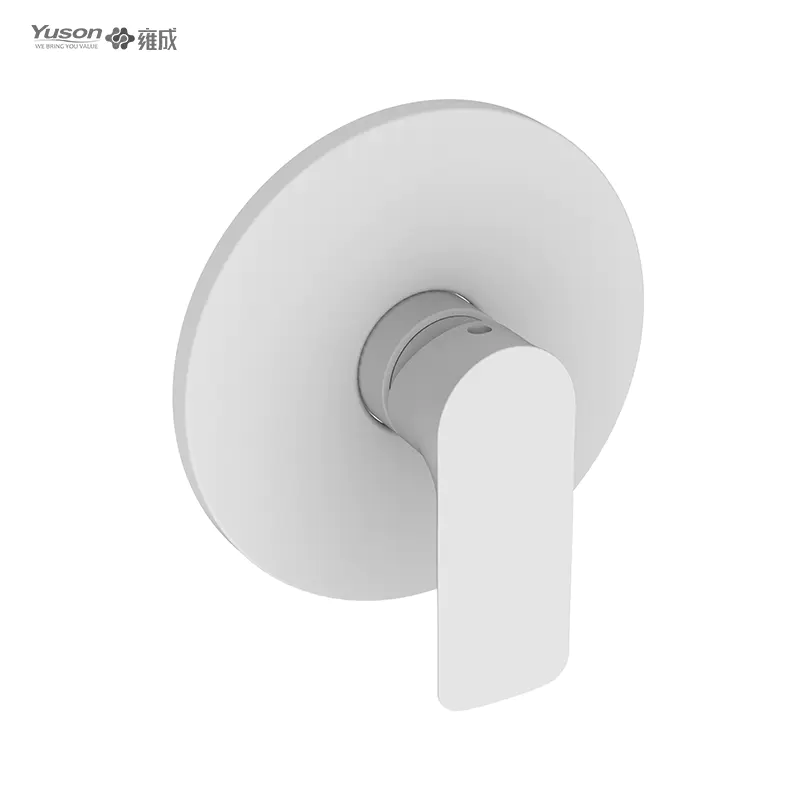
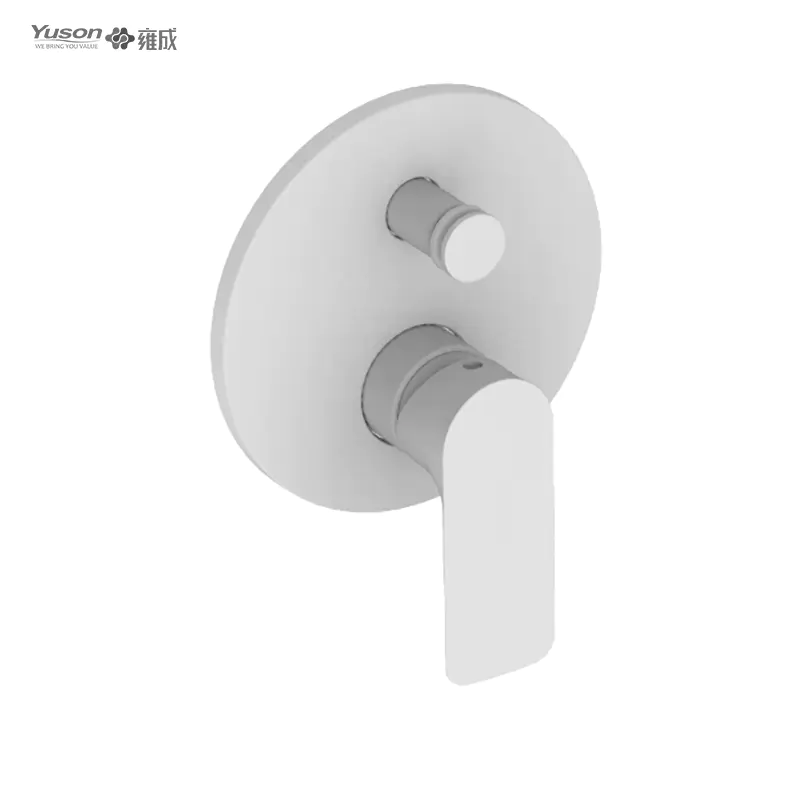
Concealed products change the economics of failure. When the valve body sits behind finished wall surfaces, replacement access can cost more than the component itself. Concealed shower design should therefore prioritize front-serviceable cartridges, diverters, thermostatic elements and seals.
Universal or modular rough-in platforms can reduce lifecycle risk when trim finishes or control styles change. A platform that remains compatible over time can reduce unnecessary wall work and simplify inventory for distributors and project customers.
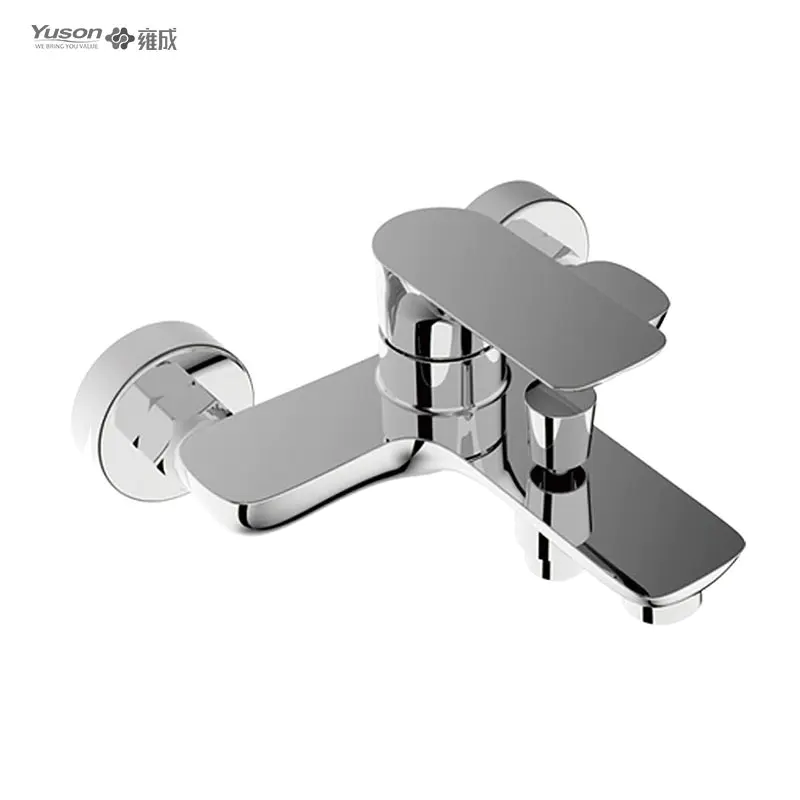
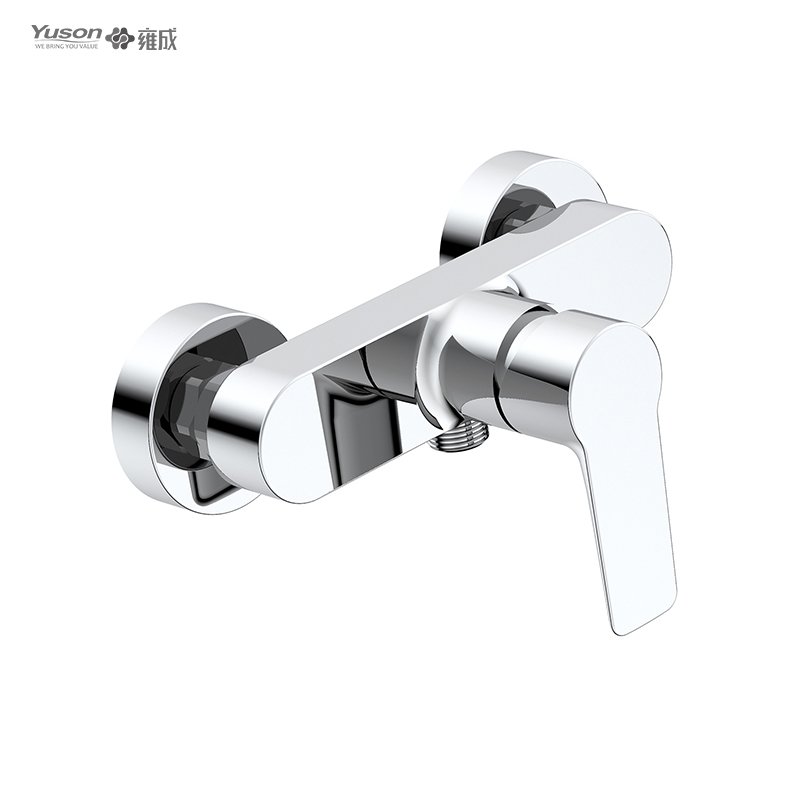
For relevant YUSON categories, see our bathroom shower faucet range and bulk shower system buying guide.

Design for Serviceability: convert “easy maintenance” into engineering KPIs
Maintainability should be designed before launch and measured during development. Useful indicators can include cartridge replacement time, number of tools required, number of components removed, front-service access, standard-component usage, service-part identification, planned spare-part availability and whether destructive disassembly is required.
Error-proof design is equally important. Clear hot/cold orientation, rough-in depth indicators, controlled torque, keyed interfaces, preassembled modules and unmistakable seal locations can reduce installation-driven failures.
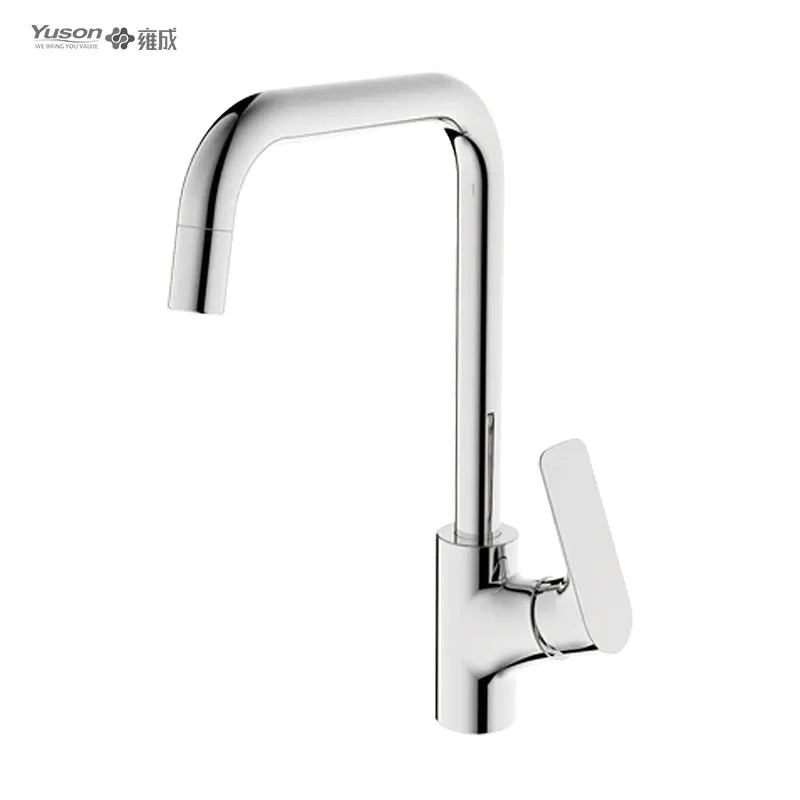
For kitchen applications, the same logic applies to pull-out hoses, spray heads, cartridges and common wear parts. See YUSON’s kitchen sink faucet range.
Sustainability increasingly includes repair, maintenance and avoiding premature obsolescence
The EU Ecodesign for Sustainable Products Regulation identifies durability, reliability, upgradability, repairability, maintenance and refurbishment as relevant product aspects. Its Annex I also addresses spare-part availability, modularity, compatibility with commonly available tools, repair instructions and ease of non-destructive disassembly.
This is a horizontal framework and should not be misread as one identical mandatory repair-support period for every faucet or shower. Its significance is the direction of travel: sustainability increasingly includes whether a product can stay useful and supportable rather than becoming prematurely obsolete.

What “premium” may mean in the next generation of bathroom products
Premium positioning has traditionally focused on material, finish, weight, styling and feature count. Long-life product architecture adds a different value proposition: predictable performance, diagnosable failure modes, accessible service parts, long-term compatibility and lower lifecycle disruption.
The target is not infinite life. It is Appropriate Durability: a product engineered for the real environment, supported for a rational period, and designed so expected maintenance does not become unnecessary replacement.
Key Takeaways
• Durable bathroom fixtures are system-reliability products, not material claims.
• Low maintenance includes cleaning, descaling, repair access and long-term spare-part support.
• Concealed and thermostatic products should be designed around future service access.
• Hotel and project buyers should evaluate total cost of ownership, not only unit price.
• Repairability, modularity and supportability increasingly intersect with sustainability.
• A useful lifecycle framework is Reliability × Repairability × Serviceability × Maintainability × Upgradeability × Long-term Support.
FAQ: Durable and Low-Maintenance Bathroom Fixtures
What makes a bathroom faucet durable?
Durability depends on the complete system: body material, cartridge, seals, hose or connections, tolerances, pressure resistance, corrosion control, surface durability and the ability to replace expected wear parts.
Is 316L stainless steel automatically more durable than brass or 304?
No single material automatically guarantees longer product life. 316L can provide stronger corrosion resistance in demanding environments, but system design, manufacturing quality, water conditions and service components still determine practical reliability.
Why is serviceability especially important for concealed showers?
Because minor failures can become expensive if service requires opening finished walls. Front-access cartridges, diverters and seals can reduce downtime and repair cost.
What does “low maintenance bathroom” mean in practice?
It means easy cleaning and descaling, accessible common wear parts, simple troubleshooting, standard tools where possible, clear part identification and reliable spare-part support.
How should hotel buyers compare two bathroom fixtures?
Compare not only unit price but also expected failure modes, service time, downtime, spare-part availability, cleaning requirements and replacement complexity.
Discuss a long-life bathroom product project with YUSON
Shanghai Yuson Industry Co., Ltd. develops and supplies faucets, shower systems and bathroom solutions using stainless steel, brass and engineered waterways. For OEM/ODM projects, we can discuss product architecture, materials, reliability testing, serviceability, spare-part logic and compliance requirements.
Explore relevant products or contact YUSON for a technical discussion.
Shanghai Yuson Industry Co., Ltd.
Phone Number: +86-21 61428790, 61428791
Mob / WhatsApp: +86-13818241770
Email: [email protected]
Web: www.yusongroup.com
Location: F1 Floor, Building 9, No. 1568 Changyang Road, 200082, Shanghai, China
WE BRING YOU VALUE!
References
1. European Union — Regulation (EU) 2024/1781, Ecodesign for Sustainable Products Regulation, 2024.
2. U.S. EPA WaterSense — Performance Overview: Lavatory Faucets and Faucet Accessories, 2022.
3. U.S. EPA WaterSense — Home Maintenance: Faucets and Showerheads.
4. U.S. EPA WaterSense — Showerheads: Performance and Maintenance Guidance.
Copyright & Rights Notice
Original analysis, editorial content and original illustrations are copyrighted by YUSON / Shanghai Yuson Industry Co., Ltd. Third-party trademarks and public materials remain the property of their respective rights holders. Public materials are referenced for research, commentary, analysis and industry communication. Rights holders may contact YUSON if they believe any use requires review.


 Contact us


 Leave A Message